


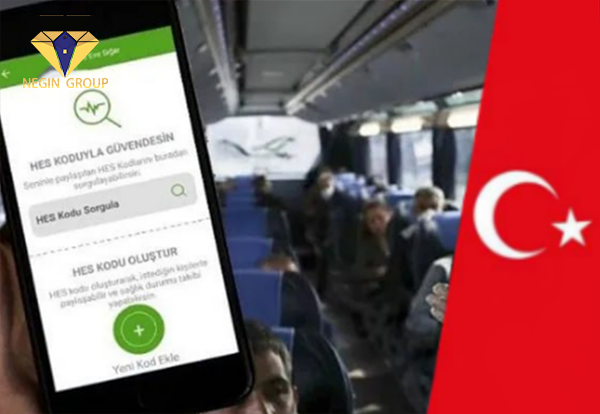
What is the HES Code in Turkey and Why Do You Need It? Complete 2025 Guide
The HES Code (Hayat Eve Sığar) was one of the most important tools introduced by the Turkish government during the COVID-19 pandemic to control mobility and protect public health. This digital code, which translates to “Life Fits Into Home,” quickly became an essential part of daily life in Turkey. From entering government buildings to using public transportation, having a HES Code was mandatory for everyone — including citizens, tourists, and foreign residents.
In this guide, we’ll give you a complete and practical overview of everything you need to know about the HES Code: how to get it, where it was used, and why it was once necessary. If you’re planning to live, study, or travel to Turkey, let Negin Group guide you every step of the way with confidence.
Even if you don’t plan to work in Turkey but are able to invest in the property market, you can apply for Turkish citizenship immediately by purchasing real estate worth at least $200,000. With a professional team of experienced consultants, Negin Group handles the entire residency and citizenship process for you. Our advisors will assess your situation and recommend the best way to obtain residency in Turkey.
Quick access to parts of the article
hidden
What is the HES Code?
The HES Code (short for Hayat Eve Sığar) is a unique code made up of 10–12 characters, combining numbers and letters. It was created by the Turkish Ministry of Health to prevent the spread of COVID-19. The main goal of this system was to monitor people’s movements in public spaces, airports, and public transportation more effectively. With this code, authorities could check individuals’ health status and restrict the movement of those who had tested positive or were at high risk.
Until March 4, 2022, presenting a HES Code was mandatory for many daily activities. However, after that date, as the number of COVID-19 cases significantly dropped, the use of the HES Code was no longer required, allowing people to travel and live in Turkey without it.
Why Was the HES Code Important?
Because COVID test results were registered in Turkey’s national health system, the government needed a way to access this data in real time for safety checks. The HES Code allowed this by linking individuals’ health records to a simple, scannable code. When entering public venues, the code could be used to check whether someone had been infected or exposed to the virus.
As mentioned, HES stands for Hayat Eve Sığar, which roughly translates to “Life Fits Into Home.” It was used across all international and domestic airports, hotels, shopping malls, and even public transport systems such as buses and metros.
Cancellation of the HES Code in Turkey
With the decline of COVID-19 cases, Turkey officially lifted the HES Code requirement on March 4, 2022. Since then, citizens and tourists alike have been able to move freely throughout the country without registering or activating a HES Code. You can now use your Istanbulkart (public transport card), access indoor facilities, and use public transportation with no restrictions related to HES.
Even though the HES Code is no longer required, it’s still useful to understand how it worked. In case of a new outbreak or the emergence of future contagious diseases, the system could be reactivated, and having prior knowledge would help you stay prepared.
Read more about this topic:
Who Needed a HES Code in Turkey?
At the height of the COVID-19 pandemic, the following individuals were required to obtain a HES Code:
Turkish citizens
Foreign residents living in Turkey
Tourists and international travelers
These individuals had to present their HES Code when entering public places such as metros, metrobuses, buses, shopping malls, airports, official buildings, and even accommodation centers.
The HES verification system allowed the relevant institution or authority to check a person’s health status. If the individual had tested positive or had contact with a confirmed COVID case, they could be denied entry to the premises.
What You Should Know About the HES Code
Below are some important and practical facts about the HES Code that will help you stay prepared in case the system is ever reintroduced:
As of now, using a HES Code in Turkey is no longer mandatory.
In the past, the code was typically checked 24 hours before a flight, and without valid approval, passengers were not allowed to board.
Even if your PCR test was negative, you could still be restricted from traveling or using public services if you had close contact with an infected person.
Children under the age of 2 were exempt from having a HES Code.
Parents could obtain a HES Code for their children under 18 via SMS or the Turkish government portal.
Tourists planning to visit Turkey had to obtain and carry a valid HES Code before boarding their flight.
Unlike the permanent Kimlik ID number, the HES Code was temporary. If forgotten or lost, it could be easily reissued, and users could even set an expiration date for it.
If you’re planning to immigrate, live, or even buy property in Turkey, being familiar with public health and identification systems like the HES Code can help you navigate the residency process with more confidence and peace of mind.

How to Get a HES Code: Step-by-Step Guide
Obtaining a HES Code was one of the essential steps for entering and moving around Turkey during the peak of the COVID-19 pandemic. Although the use of the code is no longer mandatory, understanding how to obtain it is still important — as it may become required again if public health conditions change.
In this section, we’ll walk you through the complete process of obtaining a HES Code using three methods: via the official website, SMS, and the mobile app.
Getting a HES Code via the Official Website
One of the easiest ways to get a HES Code was by registering on the official Turkish government website: register.health.gov.tr. After accessing the site, you simply needed to fill out the form carefully. Be aware that providing incorrect information could result in an invalid code.
Online Registration Steps:
Step 1: Enter your personal information including:
First name
Last name
Age
Gender
Passport number

Step 2: Specify your address of residence in Turkey as well as flight details such as the airline name and flight number.

Step 3: Declare any recent travel history within the past 10 days (if applicable).
Step 4: Review your information and click Save to view your HES Code along with a QR Code.
Once saved, you could download a PDF file containing both your code and barcode. This document was used at airports and other required locations.
Getting a HES Code via SMS
For those without internet access or who preferred a more traditional method, it was possible to get a HES Code via SMS. To do this, send a text message to 2023 (only available within Turkey) using the following format:
HES [space] IRN [space] Passport Number [space] Year of Birth (YYYY) [space] Last Name
Example:HES IRN A12345678 1999 Mohammadi
After sending the message, your personal HES Code would be delivered to you within a few minutes. This method was specifically designed for foreign tourists and did not require a Turkish phone number.
Getting a HES Code via the Hayat Eve Sığar App
The third method to obtain a HES Code was by using the official Hayat Eve Sığar mobile app, available for both Android and iOS devices. In addition to issuing codes, the app provided many other features. After installing the app:
Log in to your account or create a new one.
Tap on “Create HES Code.”
Choose the number of days you want the code to remain active and confirm.
Note: Due to regional restrictions or sanctions, the app might not work properly in Iran.
Uses and Benefits of the HES Code
During the pandemic, the HES Code played a crucial role in maintaining public health and safety. It was not just for travelers — citizens and residents were also required to use it to access public spaces, shopping malls, public transportation, and even universities.
Key uses and benefits of the HES Code included:
Checking others’ health status: With a valid HES Code, you could see whether someone you were interacting with had recently been exposed to COVID-19.
Viewing high-risk areas: The app featured a live map showing high-risk zones, helping people avoid crowded or unsafe areas.
Protecting sensitive information: Instead of sharing your Turkish ID number or personal data, the HES Code served as a simple and safe alternative.
Accurate tracking and notifications: In case of exposure, the system enabled more efficient tracking and alerting of individuals.
Facilitating domestic travel: Even travelers with negative test results could be restricted from travel without a HES Code.
Although it’s no longer mandatory, the HES Code system is still considered one of Turkey’s most effective pandemic control measures. It may be reinstated if new outbreaks occur in the future.
Final Notes on the HES Code
The HES Code is currently not required in Turkey.
If you forgot or lost your code, it could be easily reissued.
Children under 2 years old were exempt from needing a code.
You could set an expiration date on the code, allowing flexible use based on your needs.
When entering Turkey — especially for buying property in Alanya or for long-term stays — having accurate knowledge of health regulations like the HES Code was extremely helpful.

Guide to Linking the HES Code to the Istanbulkart
If you plan to use public transportation in Istanbul, one of the essential items for your trip is the Istanbulkart. This rechargeable electronic card allows easy, cheaper, and faster access to metro, bus, tram, ferry, and Marmaray lines. However, during a period of the COVID-19 crisis, using this card became conditional on linking it to the HES Code — a measure taken to protect public health and prevent the spread of infectious diseases.
Why should you link your HES Code to the Istanbulkart?
Starting from January 15, 2021 (equivalent to 26 Dey 1399 in the Persian calendar), a new law was enforced in Turkey requiring all passengers to link their HES Code to their Istanbulkart. This regulation was valid until March 4, 2022 (13 Esfand 1400). The purpose was to monitor individuals’ health status and prevent suspected or infected people from using the public transportation network.
Linking the HES Code to Istanbulkart ensured that if a person was identified as suspected or infected, they would be prevented from using transportation vehicles. This was part of the city’s smart health management system, effectively combining health data with urban transit.
Steps to link the HES Code to Istanbulkart
The process of linking the HES Code was simple but, due to technical requirements, could only be done from inside Turkey. Users had to visit the designated platform and enter the necessary information. The required details to sync the HES Code with Istanbulkart included:
Turkish National ID Number (Kimlik Number)
Full Name
Date of Birth (Gregorian calendar)
Mobile Phone Number (preferably a Turkish number)
Active Email Address
Istanbulkart Serial Number
Individual HES Code
After completing these details, a success message was displayed to the user. From that moment on, the transportation card could only be used if the linked HES Code was valid.
Read more about this topic:
What Should You Do If You Don’t Have a HES Code?
If someone had not yet obtained a HES Code, they first needed to take steps to get one. The HES Code could be obtained through various methods such as visiting the official Turkish government website, using the health app, or even sending an SMS. This code was issued uniquely for each individual and was also available as a QR Code.
For example, tourists planning to enter Turkey could enter their passport information to receive a HES Code and then use it at airports, public places, and transportation.
The Role of the HES Code in Urban Life
The HES Code in Turkey was not just a health code but also played a key role in managing daily life. From entering shopping centers to using public transport, attending some healthcare facilities, and even participating in educational classes, the code was required at certain times.
Today, with the end of quarantine periods and the easing of restrictions, using the HES Code is no longer mandatory. However, Turkey’s experience demonstrated how integrating technology and health measures can enhance social safety. At the same time, familiarity with this system remains essential for those planning to reside or invest in Turkey.

Summary
Linking health codes to public transportation cards in Turkey was an initiative aimed at ensuring the safety and health of citizens and travelers. This process helped prevent infected or at-risk individuals from using public transportation and allowed better control over city traffic flow. The steps to complete this were simple and accessible, enabling users to safely and responsibly use urban services by providing their personal information and health code. As restrictions eased, these requirements gradually diminished, but the experience highlighted the importance of coordinating technology with health management in large cities. Familiarity with such systems can be useful and practical for anyone planning to travel or live in the country.
For purchasing property in Alanya and Turkey, you can benefit from the professional consultation and services of the Negin Group team. Our team is available 24/7 to offer you free advice. For more information and to start a consultation, visit https://alanyahome.co/ or call +90 553 861 2234.
0
0
votes
Article Rating